European businesses continue to invest, but adopting a technology does not automatically mean using it effectively. That is one insight from the European Investment Bank (EIB) Group Investment Survey, published on 9 November 2026. It offers context for planning machinery, skills and financing, without turning EU percentages into forecasts for an individual company.
Investment and expectations
According to the EIB, 85% of surveyed European Union firms invested in the previous year. The balance between firms expecting to increase investment and those expecting to reduce it is positive by eight percentage points. This is a balance of expectations, not a forecast of 8% growth in total spending.
The annual survey collects information from around 12,000 firms across EU countries and, for comparison, around 800 in the United States. Responses describe behaviour and perceptions in the sample; they do not establish that every sector or region follows the same pattern.
Spreading innovation
The EIB finds that European firms are about as likely as US firms to introduce innovations new to their national or global market, but less likely to adopt innovations new to the firm itself. For industrial management the distinction matters: a solution already available elsewhere can still improve a process if integrated with the right organisation and skills.
The report says 67% of EU firms use artificial intelligence, a level similar to that in the United States. This measures reported adoption in the survey, not project quality or returns achieved. Before financing a solution, a business can define the operational problem, baseline and people who will use the results.
Energy and economic security
According to the EIB, 53% of European firms use renewable energy, compared with 37% in 2022. It also observes action to address trade restrictions, cyber threats and strategic dependencies: 64% of firms report taking action on such risks. These figures alone do not show how effective individual measures are.
When assessing an industrial investment, distinguish the initial purchase from maintenance, training, energy and integration costs. A prudent scenario can compare payback periods and cash requirements under different utilisation assumptions. Where a project depends on critical suppliers, spare-parts availability and alternative sources also belong in the plan.
Finance the decision, not just the purchase
The EIB picture complements our analysis of credit conditions reported by the ECB: investment and sustainable financing are related but distinct questions. A firm can compare internal funds and external credit by considering maturities, collateral and ability to absorb delays, rather than focusing solely on the initial rate. Decisions should reflect the project’s own cash flows and risks.
Sources and editorial transparency
EIB, EIB Group Investment Survey 2026 – European Union overview, 9 November 2026. Observations on business decisions are editorial analysis. Prepared with AI assistance and source verification.
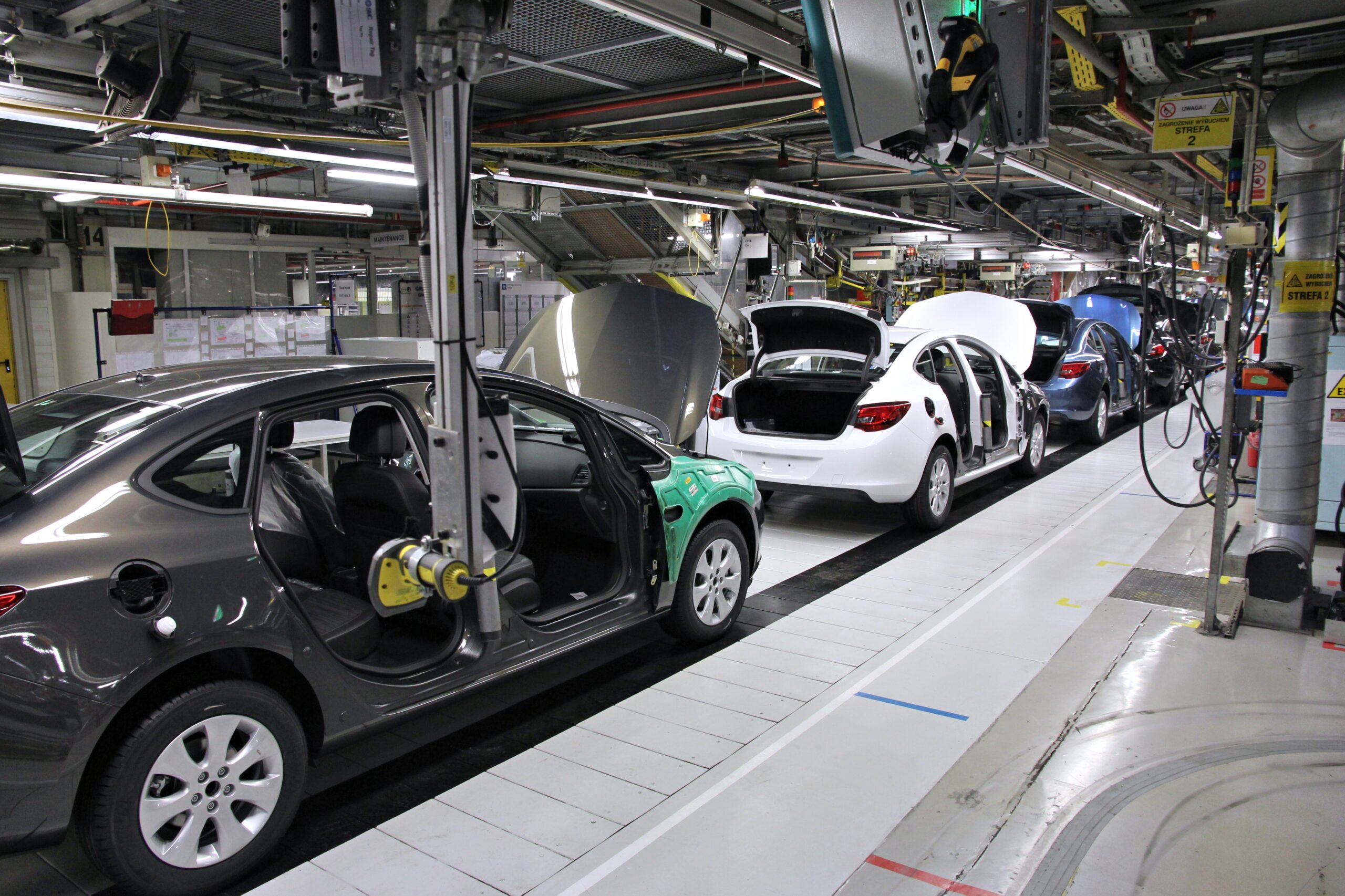
Illustrative photograph: Opel assembly line in Gliwice, Poland; it does not identify a surveyed company. Marek Ślusarczyk / Wikimedia Commons, CC BY 3.0.
