
A heat pump can turn a lower-temperature heat source into useful heat for a production process. Replacing a boiler is not enough, however: required temperature, source availability, operating hours and energy prices all affect whether a project is technically and economically viable.
In its Heat Pump Monitor 2026, the International Energy Agency (IEA) notes that industrial deployment remains limited, while identifying opportunities in low- and medium-temperature processes. The agency estimates that commercially available systems could technically supply up to around 20% of global industrial heat demand. This is technical potential, not installed capacity or a guarantee of economic viability at every site.
Start with the process and the source
The first step is to describe demand: the required temperature, the quantity of heat and the hours when it is needed. The available source also needs measurement, including flow rate, temperature and continuity. A warm source may come from a waste stream, for example; if that stream is intermittent, both equipment and process must accommodate the variation.
The difference between source and delivery temperatures affects performance. A nominal rating alone does not describe annual consumption: actual operating conditions, any storage and auxiliary consumption should be compared. At a food plant, continuity and product quality remain design constraints rather than assumed benefits.
When the economics change
A heat pump uses electricity and can deliver more heat than the electrical energy it consumes by recovering heat from a source. Actual costs nevertheless depend on performance under operating conditions and on the ratio of electricity prices to the cost of the displaced fuel, as well as investment, maintenance and operating hours.
The IEA notes that industrial installations often require tailored engineering and substantial upfront investment. The European Commission identifies energy price differences and grid connection times among the barriers to electrification. These factors need assessment at each site; no single payback period applies to every project.
Assess the project before purchase
To support a documented decision, a company can map heat uses, check sources and timing, request performance data matching its own temperatures, and compare price and electricity availability scenarios. Downtime, maintenance, pipework changes and any backup solution should also be included.
Heat recovery can involve other equipment too: our article on compressors examines why supply and demand must coincide. This editorial analysis does not replace technical plant design.
Sources and editorial transparency
IEA, Heat Pump Monitor 2026, key findings; European Commission, Electrification. This original article was prepared with AI assistance and checked against the sources cited.
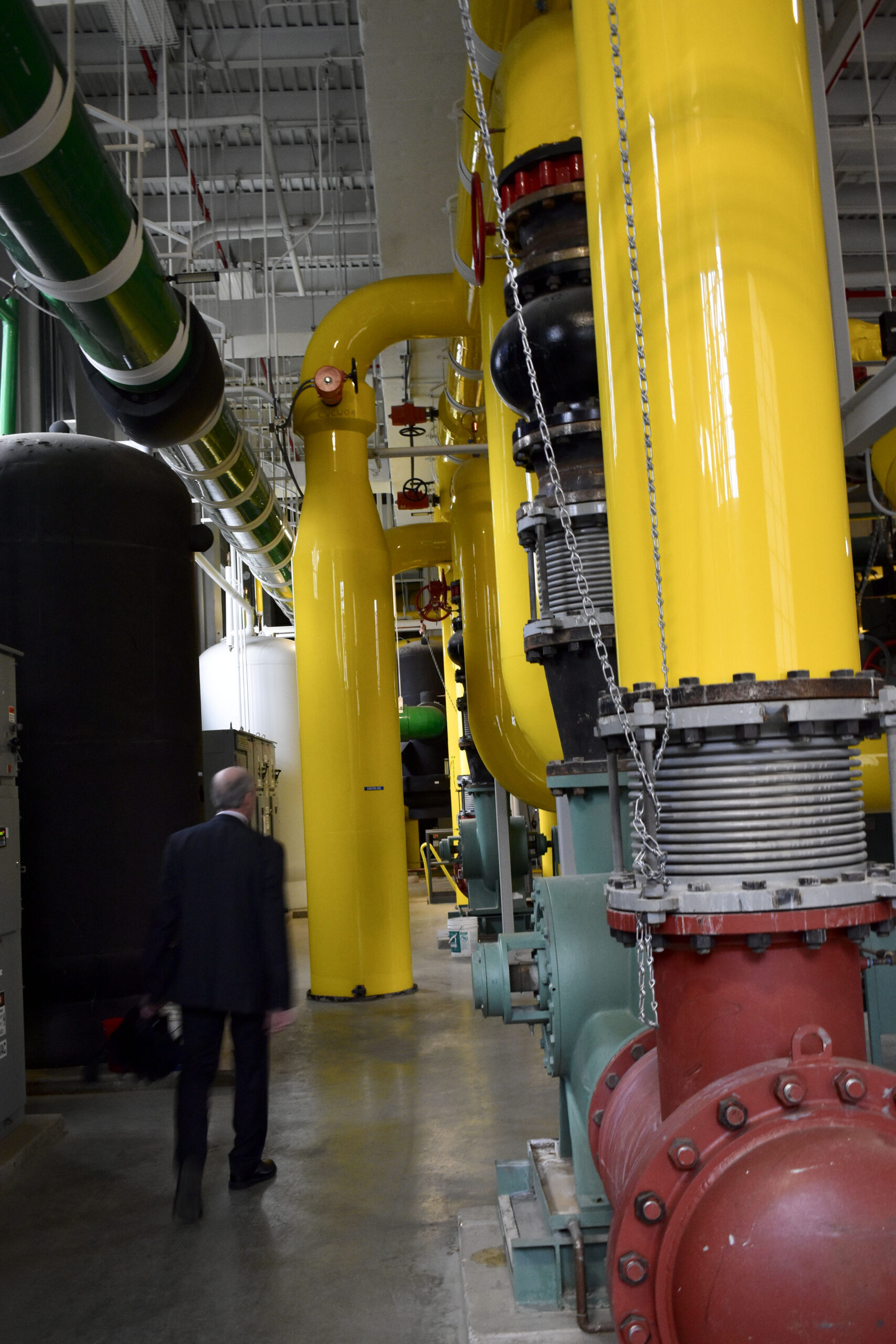
Illustrative photograph: ground-source heat pump system at Ball State University, Indiana, 2019; Paul Gipe / Wikimedia Commons, CC BY-SA 4.0, source. The image does not show an industrial plant described in this article. Display adapted to the page.
