
Two sensors can produce correct readings yet tell a misleading story together if their clocks are not aligned. When reconstructing a stoppage, a difference of seconds can reverse the apparent sequence of events. Data quality therefore needs to be designed alongside the model.
NIST’s work on digital twins includes uncertainty quantification and effective data management. The point is not to collect every signal, but to understand which information supports each prediction.
Three checks before modelling
An initial review can distinguish availability, meaning and continuity. Are data available for every shift? Does the same label represent the same state on different machines? After a disconnect, does the system recover readings or leave a gap? These operational questions directly affect credibility.
Consider an illustrative scrap count: one machine might record a rejected part, another an attempted ejection. Adding the figures without checking their definitions can distort the quality indicator.
Make uncertainty visible
On the final dashboard, a prediction can be accompanied by its latest update, measurement coverage and main limitations. A reasonable range is often more useful than an excessively precise number. Investing in data collection makes economic sense when it reduces uncertainty relevant to a decision, not merely when it increases database volume.
Sources and editorial transparency
Technical reference: NIST · Digital Twins for Advanced Manufacturing, accessed 24 October 2026. Examples and management observations are editorial analysis, not field-trial results. Prepared with AI assistance. Technical and regulatory guidance should be read in context. Italian original published 24 October 2026; English translation published 17 November 2026.
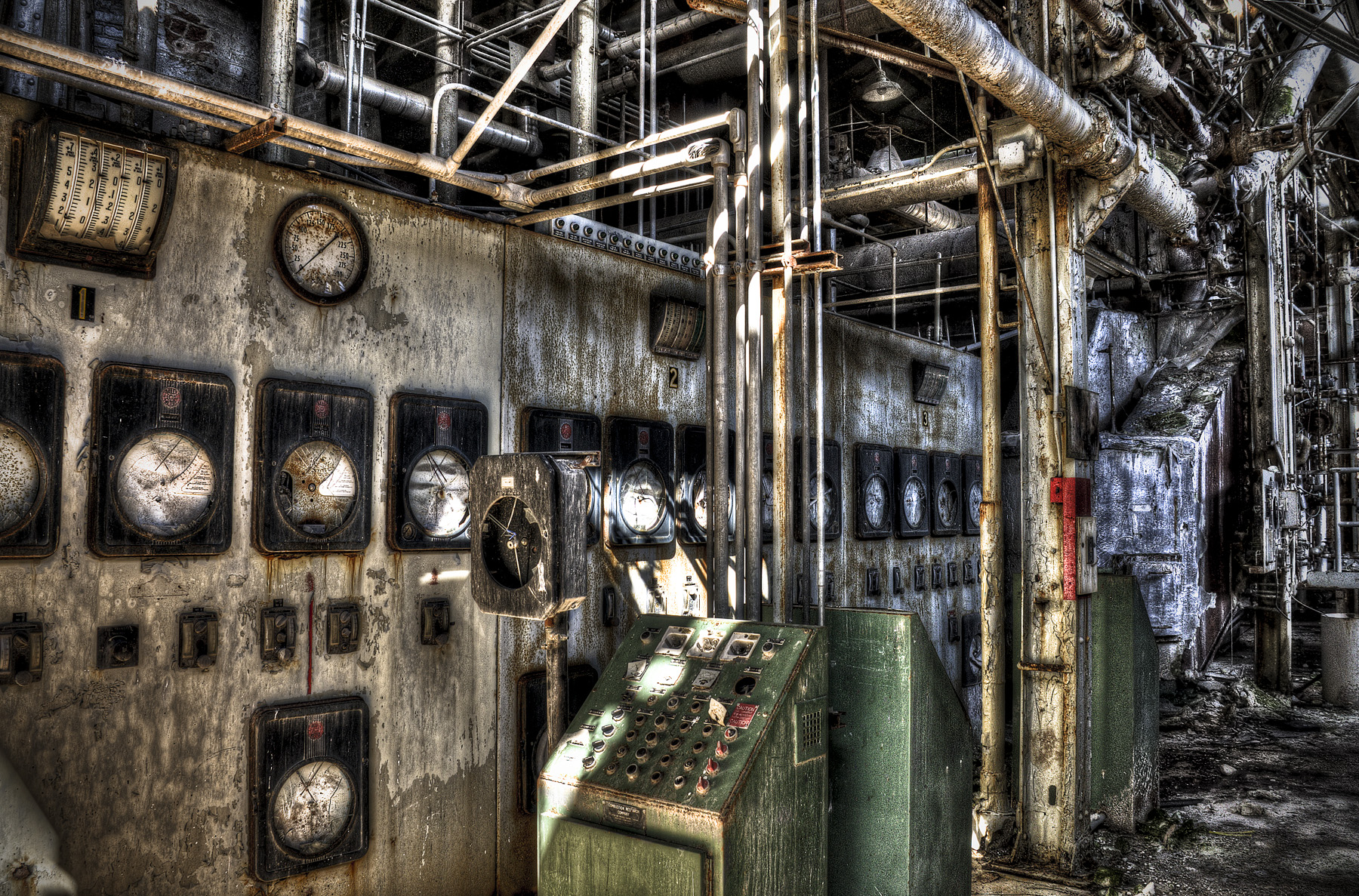
Illustrative photograph: historic sugar mill control panel. D. Johnson / Wikimedia Commons, CC BY 2.0; display adapted to the page format.
