
Building a boat with the eventual destination of its materials in mind means rethinking more than the hull: resin selection, manufacturing and relationships with future material recovery operators matter too. That is the direction outlined by the European Commission in its profile of Northern Light Composites, an Italian startup developing composites for marine and other industrial applications.
In a profile published on 16 March 2026, the Directorate-General for Maritime Affairs and Fisheries describes an approach using a thermoplastic matrix instead of a conventional thermoset one. The aim is to design new components whose layers can be separated and recovered: it is not a technology that automatically recycles old fibreglass boats.
Why the matrix changes the design
In composites, fibres and matrix work together to deliver the required properties. Thermoset materials widely used in the sector are difficult to recycle; according to the Commission, nlcomp’s solution aims to separate composite layers at end of life and turn them into new products. Recyclability is a design goal, not proof that every component necessarily reaches a recovery plant.
For a boatyard, the comparison must include required performance, manufacturing process, repairability, weight and costs. Compatibility with existing moulds, equipment and skills can matter as much as the material property. Before generalising results, individual components need testing in their intended operating conditions.
From research to production
The Commission reports that the work draws on resin research and the founders’ boatbuilding and sailing experience. Following prototypes, the company chose direct involvement in producing key components while keeping licensing open. The profile says it had raised €2.5 million over the previous five years and was preparing a further round; these figures describe the publication date, not a position independently verified in November.
The EU BlueInvest programme supported the company’s strategy and engagement with investors. That is not an independent certification of performance and does not guarantee commercial success.
The supply chain beyond the hull
A material designed for recovery needs a practical route: component identification, collection, separation and an outlet for the resulting material. Suppliers and yards can ask what information should accompany a product throughout its service life so that a future operator knows what it receives and how to handle it.
Our earlier analysis of the Italian boating supply chain shows the importance of supplier decisions. Here the industrial question is whether design, production and recovery infrastructure can be connected: material potential and actual circularity are separate outcomes to measure.
Sources and editorial transparency
European Commission, Northern Light Composites: giving boats a second life, 16 March 2026; European Commission, circular economy for end-of-life boats. Industrial observations are editorial analysis. Prepared with AI assistance and source verification.
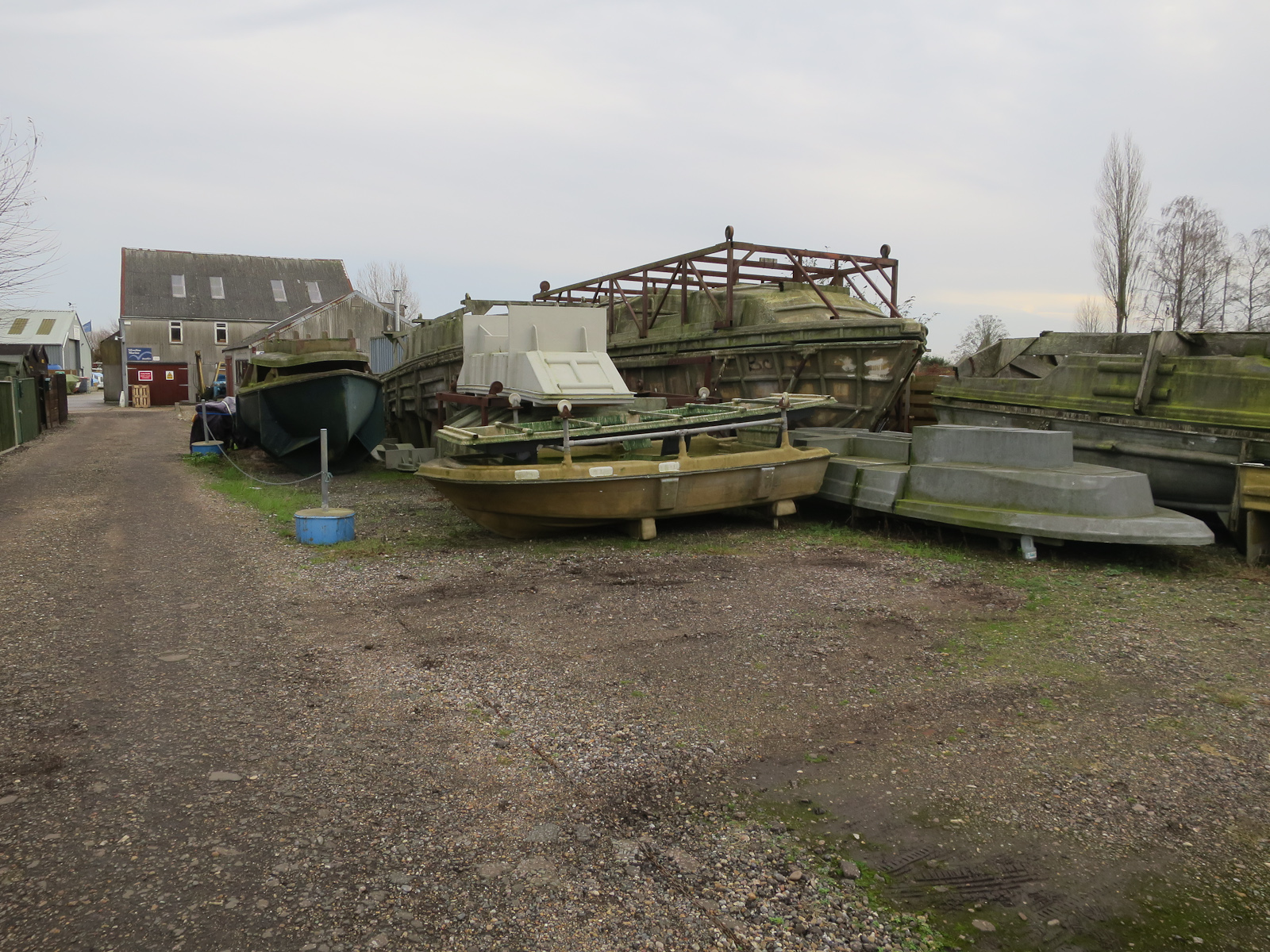
Illustrative photograph: boat moulds at Brundall, unrelated to the company discussed. Hugh Venables / Geograph / Wikimedia Commons, CC BY-SA 2.0.
