Replacing a material can change how equipment behaves even when the format remains similar. Feeding, sealing or load stability might need adjustments. Purchasing, production, quality and logistics should therefore share the decision before the final order.
The European Commission’s packaging page describes a European framework covering design and lifecycle management. Business decisions require evidence for the actual configuration and applicable requirements.
Set the comparison conditions
A trial plan should specify products, speeds, operating conditions and acceptance criteria. It is useful to include startup, changeovers and enough time to observe normal operation. A short favourable demonstration does not necessarily describe a complete shift.
One illustrative example is a film that reduces pack weight but causes more feeding stoppages. The economic comparison must include these effects, distinguishing problems solvable by adjustment from deeper incompatibilities.
Document a usable alternative
Results should record performance, waste, adaptations and observed limitations. Commercial availability and variability between supplies also deserve attention. For Economind, a material innovation becomes an industrial advantage when the package works on the line and through distribution. Price per kilogram alone can obscure opportunities and costs that emerge only during production.
Sources and editorial transparency
Technical reference: European Commission · Packaging waste, accessed 24 October 2026. Examples and management observations are editorial analysis, not field-trial results. Prepared with AI assistance. Technical and regulatory guidance should be read in context. Italian original published 24 October 2026; English translation published 19 November 2026.
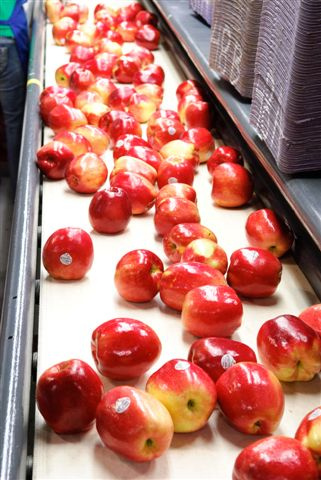
Illustrative photograph: apples on a SweeTango processing line. SweeTango / Wikimedia Commons; CC BY 2.0. Display adapted to the page format.
