
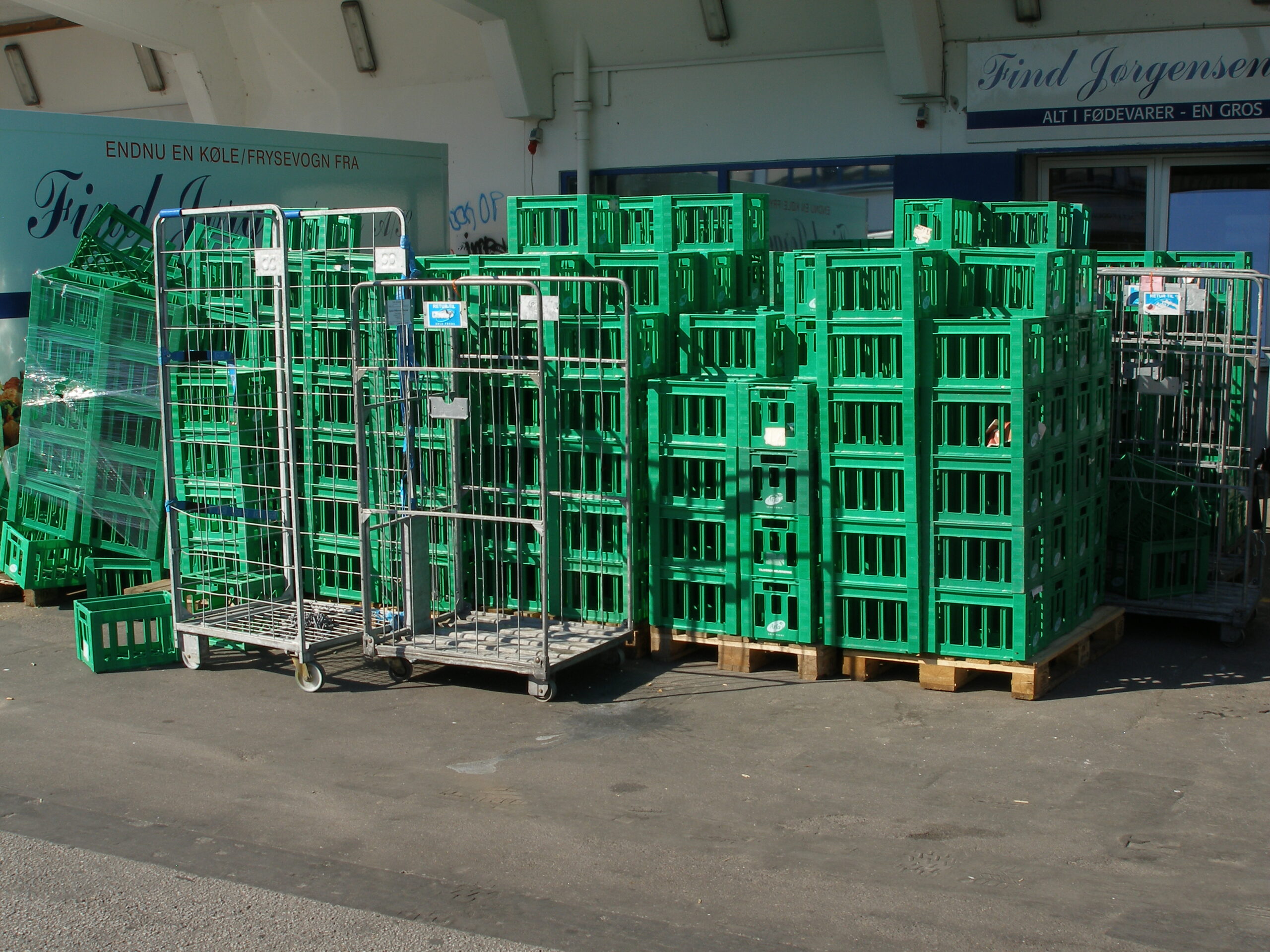
A reusable container needs a network that makes it available for its next use. If return is uncertain, part of the investment remains outside the circuit. The assessment must therefore include logistics and user behaviour as well as the physical characteristics of the packaging.
The PPWR framework described by the European Commission includes prevention, reuse and end-of-life management. The operational comparison proposed here does not replace checking the requirements applicable to individual systems.
Designing the circuit
The project should identify who owns the container, who collects it, where it is inspected and what operations are needed before reuse. Return times, space requirements and the handling of damaged items matter. For food contact, specific safety requirements must also be assessed.
In the example of a crate delivered to many locations, theoretical reuse may be high while actual rotations remain low. A more limited circuit could behave differently: the boundaries change the outcome.
Measuring the full cycle
Useful indicators include returns, time spent outside the circuit, losses, resources consumed in preparation and actual uses. Costs and environmental effects should be calculated using consistent assumptions. For a business, the decision does not end with buying a durable container: it must demonstrate that the system can return it to service consistently and achieve enough rotations to support the project.
Sources and editorial transparency
Technical reference: European Commission, Packaging waste. Accessed 24 October 2026. Examples and management considerations are editorial analysis, not results of field tests.
Original article prepared with AI assistance. Technical and regulatory guidance should be read in the context of the source and the specific process.
Illustrative photograph: reusable crates for Arla milk distribution. User:Nillerdk / Wikimedia Commons; CC BY-SA 3.0. Display adapted to the page format; photo licence unchanged.

Italian original published 24 October 2026; English translation published 12 November 2026.