
Factories worldwide installed 603,000 industrial robots in 2025, bringing the operating stock to approximately 5.079 million units. The figures come from the International Federation of Robotics (IFR) World Robotics 2026 report: annual installations rose 11% from 2024, while the operating stock grew 9%.
For a manufacturer, these figures describe the size of the market, not the automatic return from a single robotic cell. An investment decision depends on the product, volumes, required quality and the work needed to integrate equipment into a production line.
Stock and installations measure different things
The 603,000 installations are an annual flow: new units installed in factories during 2025. The 5.079 million figure is the estimated stock of robots in operation. These answer different questions and should not be added together. The stock also reflects equipment lifetimes and machines leaving service.
According to IFR, China installed approximately 354,000 robots in 2025, representing 59% of global installations; the United States installed almost 38,500. These figures describe the robot market, not the productivity of every factory or the number of jobs displaced.
Industries and applications
In its 24 September 2026 report, IFR says installations rose 10% in both electronics and automotive and 22% in metal and machinery. Around 66,000 collaborative robots were installed, representing 11% of industrial installations. The share concerns installations, not the hours actually worked alongside people.
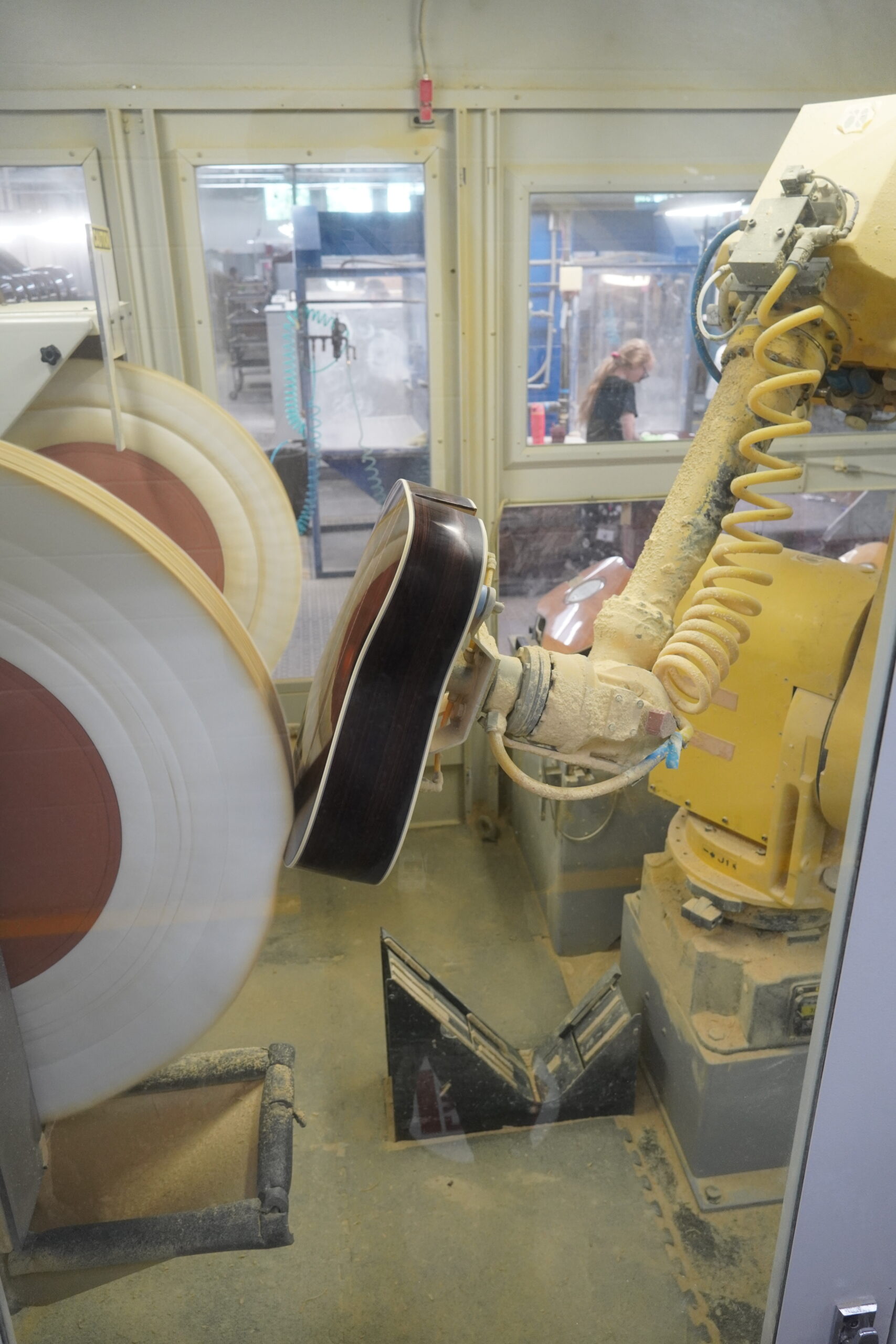
Robots can be used for welding, handling or finishing, but requirements vary by operation. Accuracy, cycle time, part supply and format changes affect results as much as the arm’s purchase price. This article’s photograph illustrates guitar finishing; it does not document the IFR figures.
The whole production cost before buying
A useful comparison starts with the entire process: part preparation, cell feeding, quality checks, stoppages and restarts. A quotation should include integration, safety devices, training, maintenance and line changes. For small batches, programming and changeovers also affect available capacity.
Companies can compare scenarios using verifiable assumptions about volumes, scrap and operating hours. IFR statistics provide a global context; decisions for an individual plant require specific measurements and assessments. Our article on virtual commissioning discusses checks that can be made before start-up.
Sources and editorial transparency
IFR, World Robotics 2026, 24 September 2026; IFR, market overview. Investment considerations are editorial analysis. This original article was prepared with AI assistance and checked against the cited sources.
Illustrative photograph: robotic arm polishing a guitar at the C.F. Martin factory; Henrysz / Wikimedia Commons, CC BY 4.0, source. Display adapted to the page.
